

Swap towering skyscrapers for winding souqs, celebrated museums and a destination where history, faith and culture remain deeply entwined.
Words: Humairah Hanif
For many visitors, the UAE means Dubai’s glittering skyline and Abu Dhabi’s architectural grandeur. Just beyond the bright lights lies Sharjah, an emirate that has slowly earned its reputation as the country’s cultural heart. Recognised by UNESCO as the Arab World’s Cultural Capital in 1998, it has long championed literature, education and the arts, and has conserved its traditional architecture rather than letting rapid development eclipse it.
I based myself at The Chedi Al Bait, a boutique hotel within the Heart of Sharjah heritage district, housed in beautifully restored merchant homes. The real attraction, though, lay beyond its walls.
The Heart of Sharjah
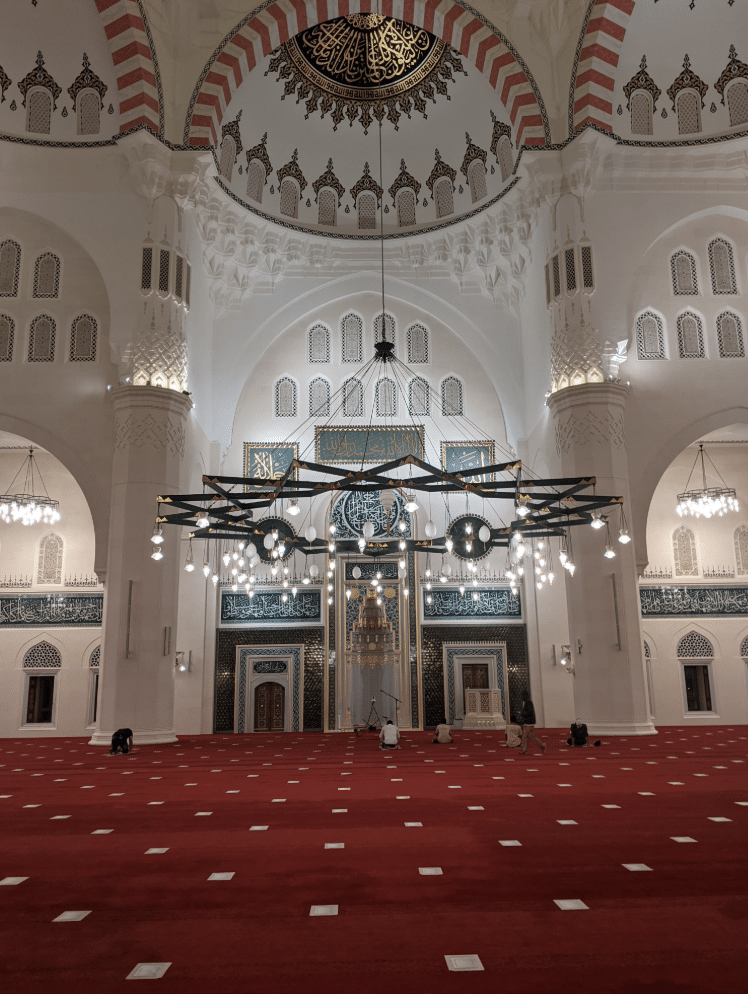
This district is best discovered on foot. Within minutes, broad roads give way to alleyways of coral-stone houses, carved wooden doors and shaded courtyards, while barjeel wind towers rise above the rooftops. It is one of the Gulf’s most ambitious heritage restoration projects, reviving the old trading quarter. One of my most memorable moments came as the adhan drifted from Obaid Bin Issa Mosque through the market alleyways.
Souq Al Arsah
At the centre sits Souq Al Arsah, believed to be one of the UAE’s oldest marketplaces, where merchants from Arabia, Persia, East Africa and the Indian subcontinent once traded pearls, spices and textiles. Today its stalls sell perfumes, antiques and handicrafts, the scent of oud drifts through the air, and Arabic coffee awaits in shaded cafés.
A Civilisation on Display
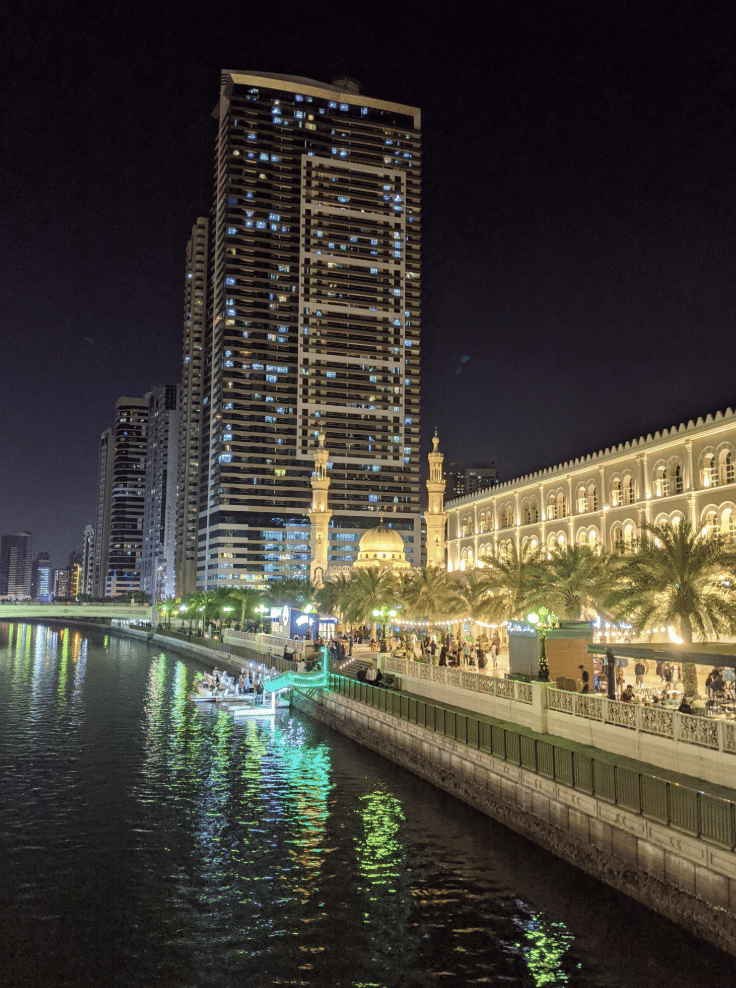
A short walk away, the Sharjah Museum of Islamic Civilization holds thousands of artefacts spanning more than fourteen centuries: illuminated Qur’anic manuscripts, ceramics, textiles and coins. The science galleries, with their astrolabes, navigational instruments and medical manuscripts, are particularly fascinating. For Muslim visitors, they are a reminder of a rich intellectual tradition in which faith and learning were deeply intertwined.
Contemporary Sharjah
Culture here is not only about the past. The Sharjah Arts Foundation and the acclaimed Sharjah Biennial bring artists from the Middle East, Asia and Africa into restored heritage buildings. The House of Wisdom, inspired by the great libraries of the Islamic Golden Age, recalls Baghdad’s historic Bayt al-Hikmah and combines books, technology and community programmes in a setting designed for reflection.
Cafés and Culture
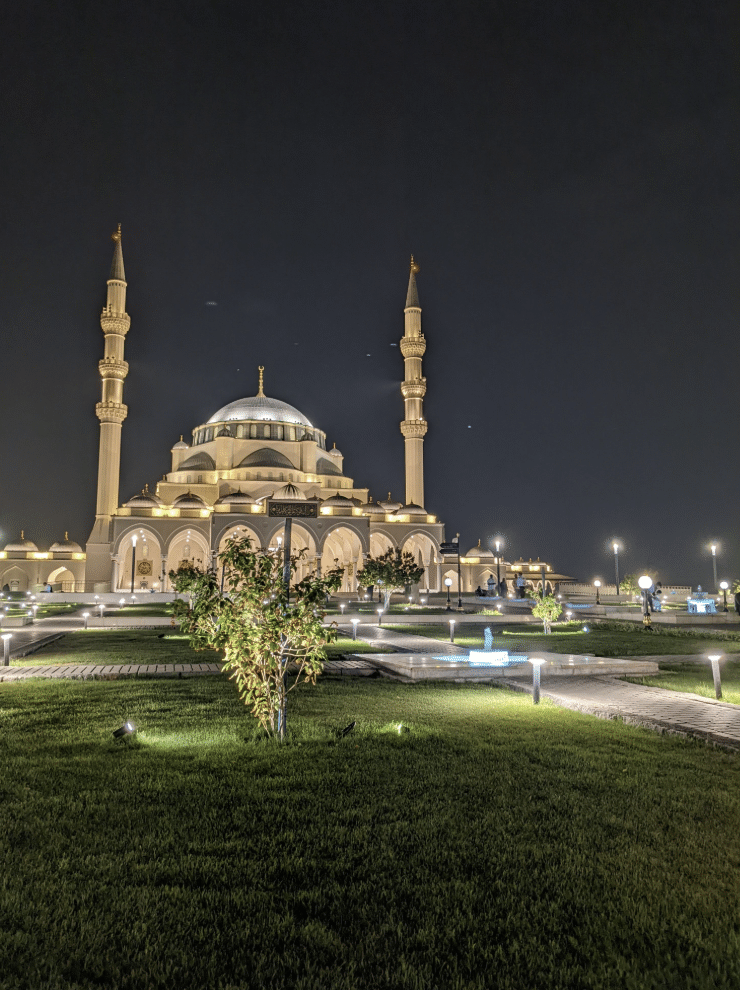
Leave time for coffee at Ratios Coffee in Souq Al Shanasiyah, or lunch at Fen Café & Restaurant within the Sharjah Art Foundation. If your itinerary allows, visit the Rain Room, one of the city’s most celebrated installations, where you can walk through falling rain without getting wet.
Sharjah may not seek attention the way its neighbours do, and that is precisely its appeal. It invites you to slow down and discover a different side of the UAE, shaped by scholarship, trade, art and faith.
Traveller’s tip: Visit between October and April, when cooler temperatures suit exploring. Many attractions are within easy reach of one another, so you can combine museums, souqs, galleries and waterfront walks in a single day.
Read the full detailed journey in our latest issue of British Muslim Magazine – Subscribe Today!