
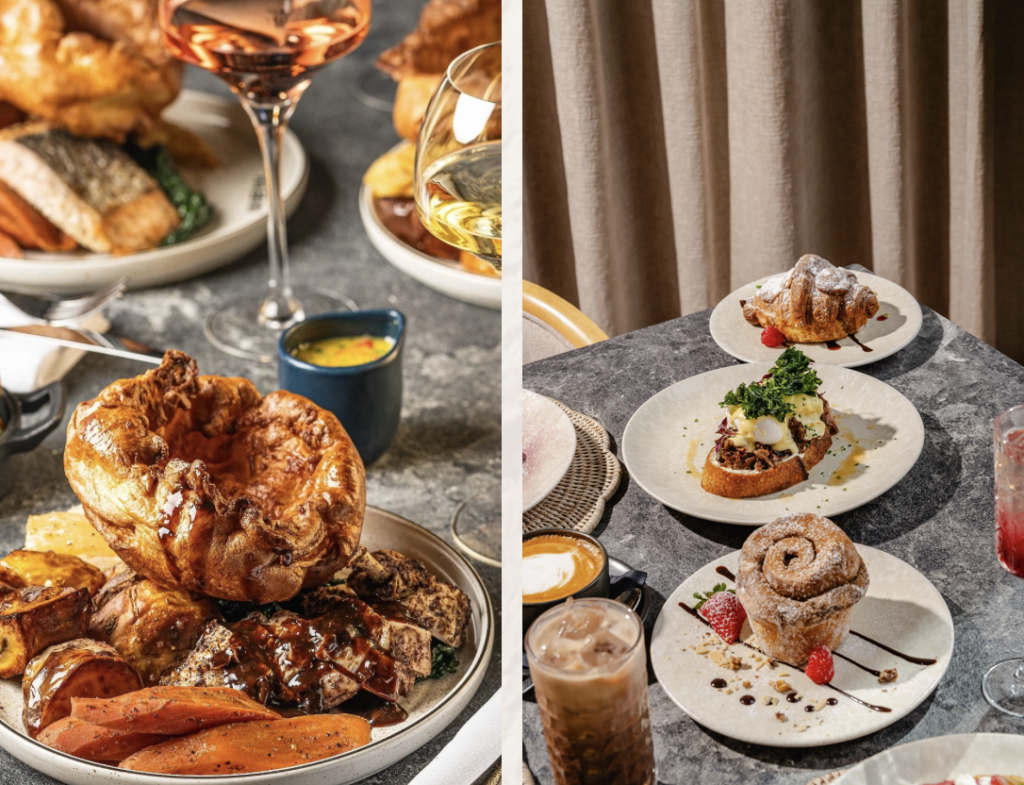
From Palestinian street food served out of a silver caravan to lavish Pakistani feasts, rooftop dining and the unmistakable smell of freshly grilled meat, Leeds is quietly building one of the North’s most exciting halal food cultures.
There are cities you visit for the architecture, others for the nightlife, and then there are cities you find yourself remembering through your stomach. Leeds, increasingly, belongs in the latter category.
Walk through the city centre on a busy afternoon and the smells begin to compete for your attention. There is the unmistakable warmth of freshly baked naan, the sharp tang of pickled vegetables, the smoke of meat turning slowly over charcoal and the sweet, milky pull of karak chai. Somewhere between the Victorian market halls and the glass-fronted restaurants of the modern city, Leeds is telling a story through its food.
And halal food is an increasingly important part of that story.


For years, halal dining in Britain was too often reduced to a familiar handful of options: a curry house, a kebab shop or somewhere to grab a late-night burger. Leeds has moved well beyond that stereotype. Its halal food scene is now a sprawling mix of cuisines, communities and culinary ambitions, bringing together traditional family-run businesses, independent street-food traders and restaurants with considerably more elaborate ideas about what a meal should look like.
The interesting thing is not simply how much choice there is. It is how confidently that choice is being presented.
A city with flavour running through its streets
To understand Leeds’ food culture, you have to look beyond the polished restaurants of the city centre.
Neighbourhoods such as Harehills, Chapeltown and Beeston have long-standing South Asian, African and other multicultural communities whose food businesses form an important part of everyday life. Here, food is not a trend or a marketing exercise. It is part of the neighbourhood’s identity.
Roundhay Road and Chapeltown Road offer a glimpse of this diversity, with restaurants, takeaways, specialist food shops and businesses serving communities that have helped shape the city over generations.
There is something particularly appealing about the informality of these places. You are not necessarily looking for an elaborate dining experience. Sometimes you simply want a generous plate of food, a familiar flavour and somewhere that feels welcoming.
That sense of familiarity is an important part of the halal scene’s appeal. But it is only one part of the picture.
From Palestine to the streets of Leeds
In the city centre, the evolution of halal food is perhaps most visible in its street-food culture.
On Albion Street, Akkawi has established itself with Palestinian food served from a distinctive silver caravan. Its made-from-scratch falafel and shawarma offer a different sort of lunchtime experience, one that feels closer to a street-food market than a conventional restaurant.
There is something compelling about the simplicity of the operation. A compact kitchen, a focused menu and food prepared to order. Its entire menu is described as halal, with vegetarian and vegan-friendly options too.
A short distance away, Kirkgate Market offers another snapshot of the city’s culinary diversity. Among its stalls, Sweet Saeeda brings Tunisian cooking into the mix, serving sandwiches, salads and larger plates. It is the sort of place that reminds you that the halal food conversation should never begin and end with South Asian cuisine.
The market also houses Leziza, a Pakistani curry counter serving curries, wraps and sheekh kebabs. It is a reminder that some of the city’s most interesting food experiences are not necessarily found behind impressive restaurant façades.
These are places where the food does the talking.
The changing face of halal dining
Of course, Leeds is not just about quick lunches and street-food counters.
At the more ambitious end of the dining scene, restaurants are increasingly presenting halal food as part of a broader hospitality experience.
At Leeds Dock, Mumtaz offers a substantial Pakistani dining experience, with a waterfront setting and an emphasis on family meals and sharing. It represents a style of dining in which food is an occasion in itself: generous dishes, large tables and the pleasure of bringing people together.


Meanwhile, at Victoria Gate, Habbibi takes halal dining in a rather different direction. Its rooftop setting and Arab-inspired atmosphere offer a more contemporary interpretation of Middle Eastern hospitality, demonstrating that halal restaurants can compete in the premium dining space without losing their cultural identity.
Then there is Tharavadu, on Mill Hill, which brings the flavours of Kerala to the centre of Leeds. Its regional South Indian cooking provides an important reminder that the city’s halal food landscape is not one-dimensional. There are entire culinary traditions waiting to be explored beyond the familiar curry-house menu.
The growth of this diversity is significant. Halal diners are not simply looking for somewhere that accommodates their dietary requirements. They want interesting food, thoughtful hospitality and restaurants that are worth travelling across town for.
Increasingly, Leeds is providing exactly that.
A new generation of food adventures
Perhaps the most exciting development is the way halal food is finding its place in the city’s newer food spaces.
Trinity Kitchen, for example, has helped bring independent street-food concepts into the mainstream shopping experience. Its arrival of Jerk Junction in May 2026 introduced halal Caribbean cooking to the food hall, with flame-grilled jerk chicken, curry goat and traditional accompaniments.
It is an interesting addition because it expands the conversation beyond the cuisines most commonly associated with halal dining in Britain.
Food should be about discovery. It should encourage you to try something unfamiliar, ask questions and occasionally order something you cannot pronounce correctly the first time.
That spirit of discovery is increasingly evident across Leeds.
The city’s younger diners, particularly its substantial student population, are helping create demand for food that is affordable, accessible and exciting. Burgers, fried chicken, Middle Eastern wraps, Asian-inspired dishes and traditional South Asian cooking all sit alongside one another.
Halal food is no longer confined to a particular type of restaurant or occasion. It is part of the everyday food culture.
More than what is on the plate
There is, however, something deeper happening here.
Food has always been one of the most visible ways communities maintain their cultural connections. Recipes travel between generations. Restaurants become meeting places. Markets provide a sense of familiarity, particularly for people whose families have travelled thousands of miles to make a home somewhere new.
In Leeds, halal businesses are part of that wider story.
They are places where families gather, students eat after lectures, workers grab lunch and friends meet over food. Some serve traditional dishes that have remained largely unchanged for decades. Others are experimenting, borrowing ideas and bringing different food cultures together.
And perhaps that is what makes the city’s halal scene particularly interesting. It is not a single cuisine, community or dining experience, its a moment & experience.