
BRITISH MUSLIM MAGAZINE

A leading Travel and Lifestyle publication

ESTABLISHED 2013 / LONDON

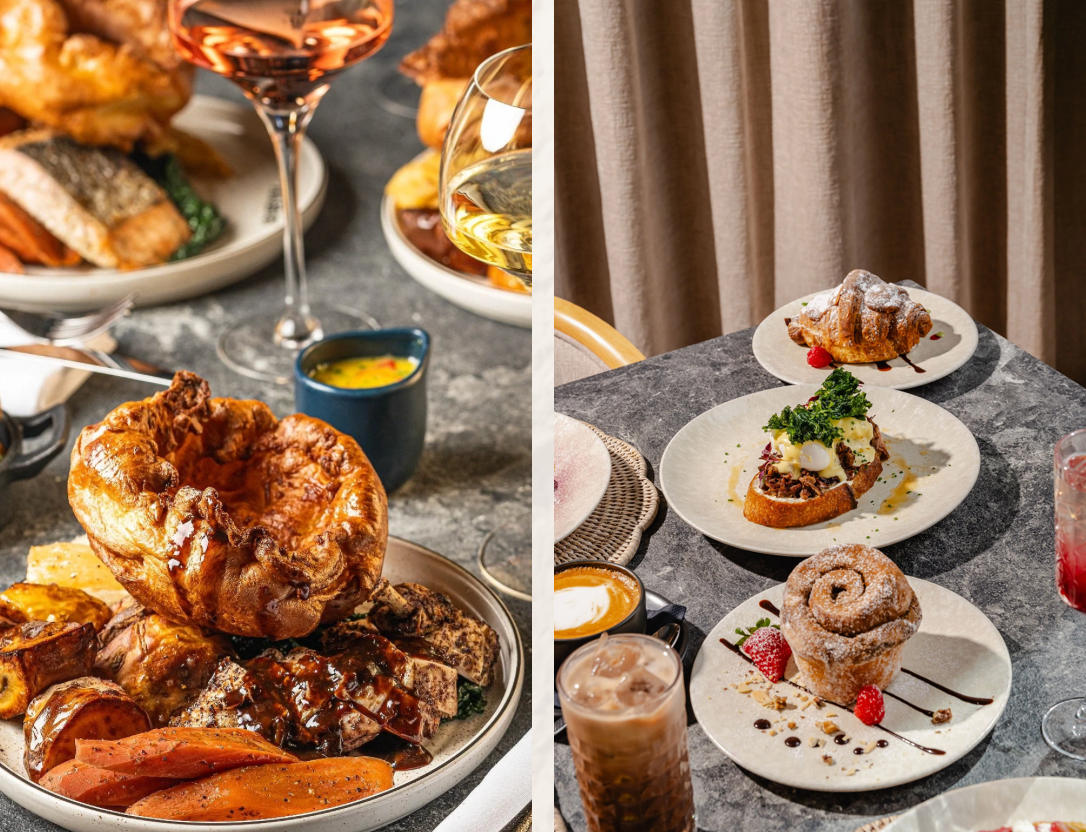
From Palestinian street food served out of a silver caravan to lavish Pakistani feasts, rooftop dining and the unmistakable smell of freshly grilled meat, Leeds is quietly building one of the North’s most exciting halal food cultures.

There are cities you visit for the architecture, others for the nightlife, and then there are cities you find yourself remembering through your stomach. Leeds, increasingly, belongs in the latter category.

Walk through the city centre on a busy afternoon and the smells begin to compete for your attention. There is the unmistakable warmth of freshly baked naan, the sharp tang of pickled vegetables, the smoke of meat turning slowly over charcoal and the sweet, milky pull of karak chai. Somewhere between the Victorian market halls and the glass-fronted restaurants of the modern city, Leeds is telling a story through its food.

And halal food is an increasingly important part of that story.

For years, halal dining in Britain was too often reduced to a familiar handful of options: a curry house, a kebab shop or somewhere to grab a late-night burger. Leeds has moved well beyond that stereotype. Its halal food scene is now a sprawling mix of cuisines, communities and culinary ambitions, bringing together traditional family-run businesses, independent street-food traders and restaurants with considerably more elaborate ideas about what a meal should look like.

The interesting thing is not simply how much choice there is. It is how confidently that choice is being presented.

A city with flavour running through its streets

To understand Leeds’ food culture, you have to look beyond the polished restaurants of the city centre.

Neighbourhoods such as Harehills, Chapeltown and Beeston have long-standing South Asian, African and other multicultural communities whose food businesses form an important part of everyday life. Here, food is not a trend or a marketing exercise. It is part of the neighbourhood’s identity.

Roundhay Road and Chapeltown Road offer a glimpse of this diversity, with restaurants, takeaways, specialist food shops and businesses serving communities that have helped shape the city over generations.

There is something particularly appealing about the informality of these places. You are not necessarily looking for an elaborate dining experience. Sometimes you simply want a generous plate of food, a familiar flavour and somewhere that feels welcoming.

That sense of familiarity is an important part of the halal scene’s appeal. But it is only one part of the picture.

From Palestine to the streets of Leeds

In the city centre, the evolution of halal food is perhaps most visible in its street-food culture.

On Albion Street, Akkawi has established itself with Palestinian food served from a distinctive silver caravan. Its made-from-scratch falafel and shawarma offer a different sort of lunchtime experience, one that feels closer to a street-food market than a conventional restaurant.

There is something compelling about the simplicity of the operation. A compact kitchen, a focused menu and food prepared to order. Its entire menu is described as halal, with vegetarian and vegan-friendly options too.

A short distance away, Kirkgate Market offers another snapshot of the city’s culinary diversity. Among its stalls, Sweet Saeeda brings Tunisian cooking into the mix, serving sandwiches, salads and larger plates. It is the sort of place that reminds you that the halal food conversation should never begin and end with South Asian cuisine.

The market also houses Leziza, a Pakistani curry counter serving curries, wraps and sheekh kebabs. It is a reminder that some of the city’s most interesting food experiences are not necessarily found behind impressive restaurant façades.

These are places where the food does the talking.

The changing face of halal dining

Of course, Leeds is not just about quick lunches and street-food counters.

At the more ambitious end of the dining scene, restaurants are increasingly presenting halal food as part of a broader hospitality experience.

At Leeds Dock, Mumtaz offers a substantial Pakistani dining experience, with a waterfront setting and an emphasis on family meals and sharing. It represents a style of dining in which food is an occasion in itself: generous dishes, large tables and the pleasure of bringing people together.

Meanwhile, at Victoria Gate, Habbibi takes halal dining in a rather different direction. Its rooftop setting and Arab-inspired atmosphere offer a more contemporary interpretation of Middle Eastern hospitality, demonstrating that halal restaurants can compete in the premium dining space without losing their cultural identity.

Then there is Tharavadu, on Mill Hill, which brings the flavours of Kerala to the centre of Leeds. Its regional South Indian cooking provides an important reminder that the city’s halal food landscape is not one-dimensional. There are entire culinary traditions waiting to be explored beyond the familiar curry-house menu.

The growth of this diversity is significant. Halal diners are not simply looking for somewhere that accommodates their dietary requirements. They want interesting food, thoughtful hospitality and restaurants that are worth travelling across town for.

Increasingly, Leeds is providing exactly that.

A new generation of food adventures

Perhaps the most exciting development is the way halal food is finding its place in the city’s newer food spaces.

Trinity Kitchen, for example, has helped bring independent street-food concepts into the mainstream shopping experience. Its arrival of Jerk Junction in May 2026 introduced halal Caribbean cooking to the food hall, with flame-grilled jerk chicken, curry goat and traditional accompaniments.

It is an interesting addition because it expands the conversation beyond the cuisines most commonly associated with halal dining in Britain.

Food should be about discovery. It should encourage you to try something unfamiliar, ask questions and occasionally order something you cannot pronounce correctly the first time.

That spirit of discovery is increasingly evident across Leeds.

The city’s younger diners, particularly its substantial student population, are helping create demand for food that is affordable, accessible and exciting. Burgers, fried chicken, Middle Eastern wraps, Asian-inspired dishes and traditional South Asian cooking all sit alongside one another.

Halal food is no longer confined to a particular type of restaurant or occasion. It is part of the everyday food culture.

More than what is on the plate

There is, however, something deeper happening here.

Food has always been one of the most visible ways communities maintain their cultural connections. Recipes travel between generations. Restaurants become meeting places. Markets provide a sense of familiarity, particularly for people whose families have travelled thousands of miles to make a home somewhere new.

In Leeds, halal businesses are part of that wider story.

They are places where families gather, students eat after lectures, workers grab lunch and friends meet over food. Some serve traditional dishes that have remained largely unchanged for decades. Others are experimenting, borrowing ideas and bringing different food cultures together.

And perhaps that is what makes the city’s halal scene particularly interesting. It is not a single cuisine, community or dining experience, its a moment & experience.

Latest Events

Fresh perspectives from our global contributors

Membership & Subscription

SUBSCRIBE TO BRITISH MUSLIM MAGAZINE

Discover inspiring travel, culture, faith, food, fashion, beauty and lifestyle stories — delivered directly to your doorstep in print or instantly on your favorite devices.

PRINT EDITION

Premium collectible print copy with luxury textured cover finish.

DIGITAL ACCESS

Instant access to our current issue and entire 11-year luxury catalog library.

THE LATEST ISSUE

Issue 48: The Heritage & Sustainable Future Issue

In this milestone edition, we traverse continents to unearth the stories that shape contemporary Muslim identity. From pioneering architects restoring medieval landmarks in Central Asia to local fashion innovators championing strict zero-waste garment sourcing in London.

RELEASED

SPRING 2026

PAGES

184 PREMIUM PAGES

THEME

HERITAGE & MATERIALLY

History & Heritage

Exploring The Legacy Of Time

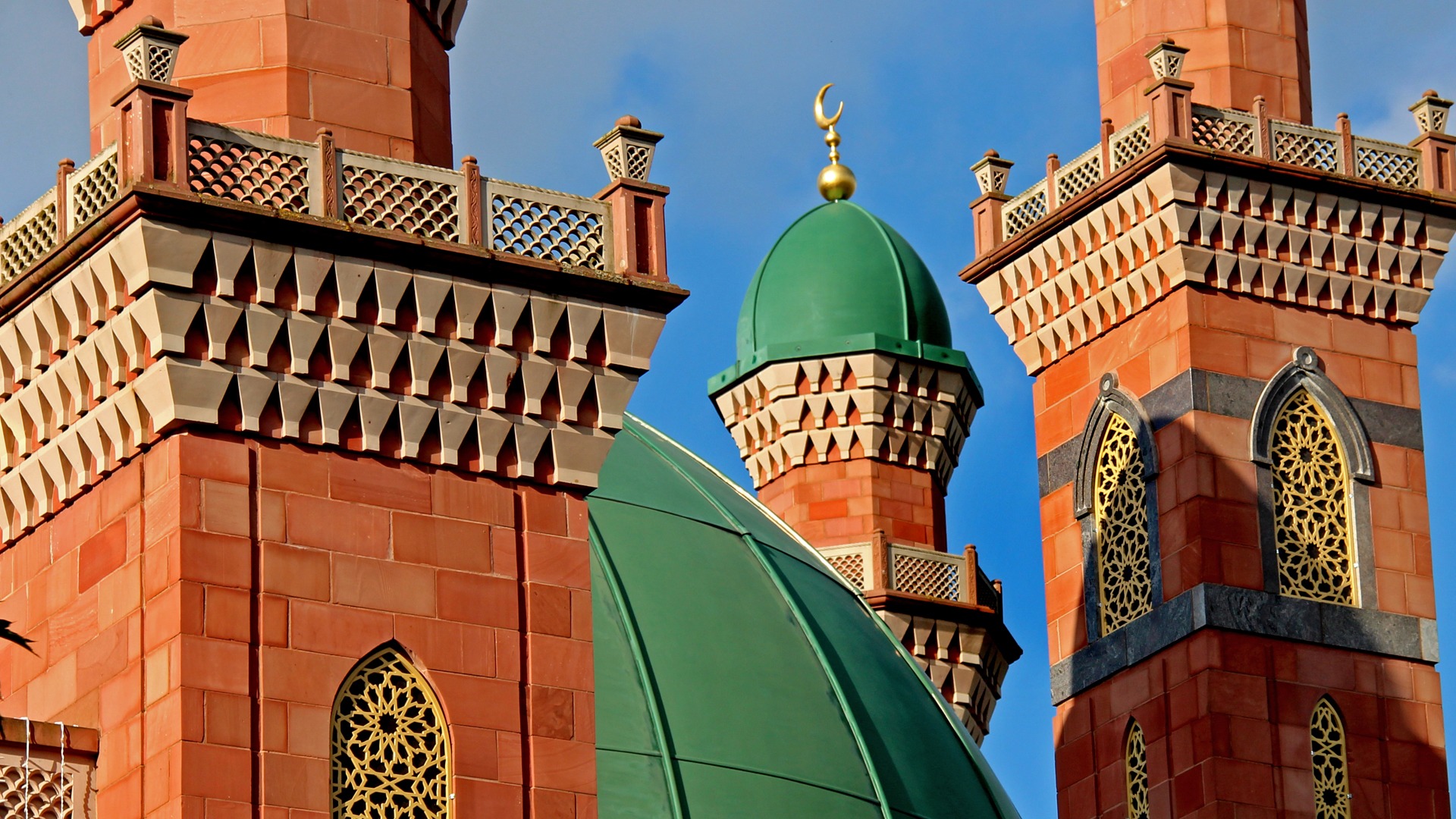
Islam has deep roots in Wales, stretching back centuries, and a new study by Dr Abdul-Azim Ahmed, deputy director at the Centre for the Study of Islam at Cardiff University sheds light on this rich and often overlooked history. His research, detailed in the book Muslim Wales – A History in Nine Places, explores how Islam has been woven into the fabric of Welsh life across towns, cities, and rural communities.

One remarkable story highlights the nation’s first Muslim grave, found in a quiet chapel in rural Carmarthenshire. Khadija Amelia Buksh, born in 1867, converted to Islam and married Sheikh Meeran Buksh, a law student from a distinguished Indian family. Their union, conducted at the Liverpool Muslim Institute, was marked by resilience: Sheikh Meeran faced obstacles in his legal career due to unfounded allegations, while Khadija supported him fully until her untimely death at 26.
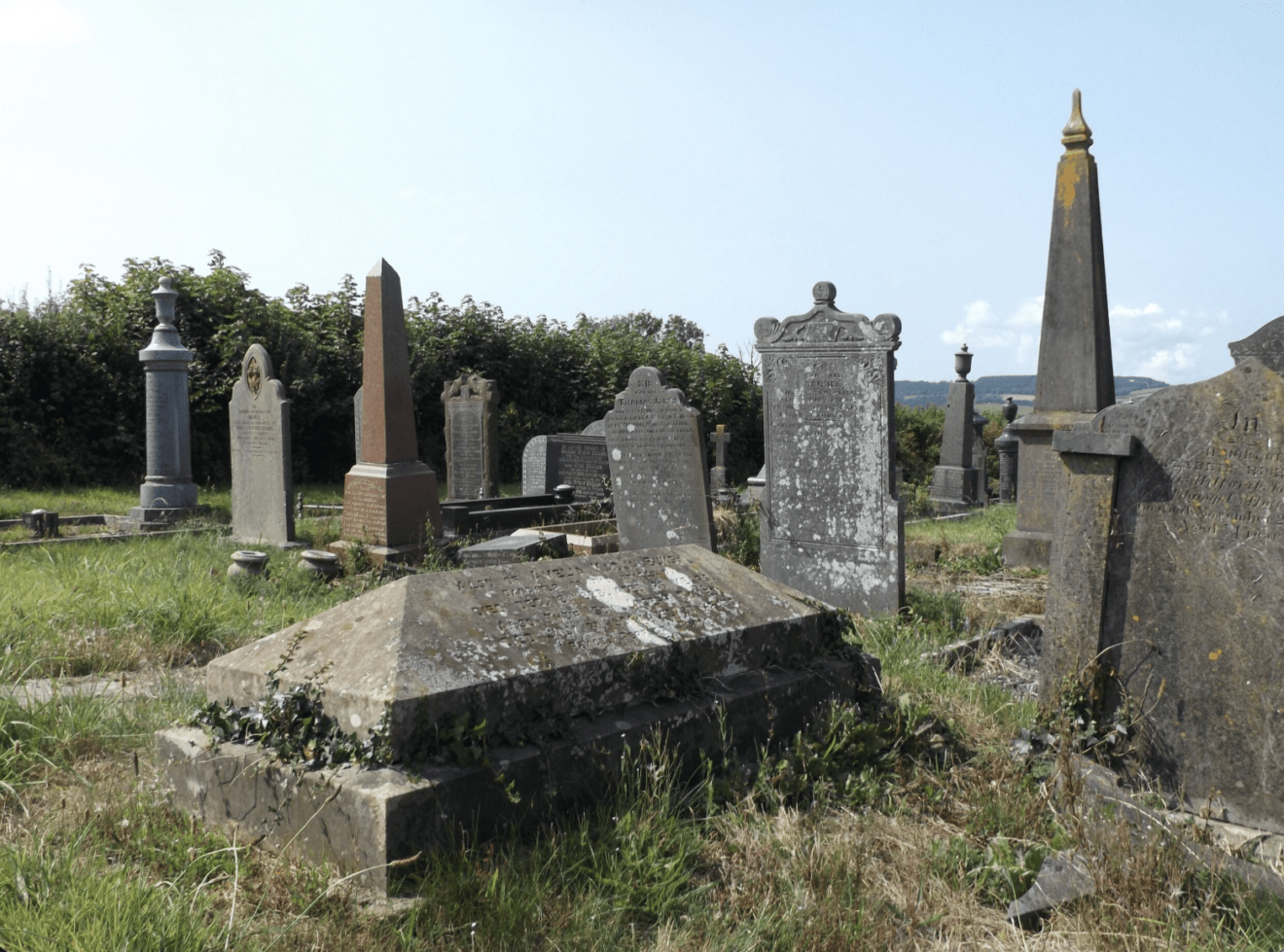
The grave of Khadija Amelia Buksh (nee Davies), born in 1867 and died in 1893. Her grave is the earliest identifiable Muslim grave in Wales. Credit AA 
Bedd Khadija Amelia Buksh (Davies gynt), a aned yn 1867 a bu farw ym 1893. Ei bedd yw’r un Mwslimaidd cynharaf sy’n hysbys yng Nghymru. Llun AA 

Dr Ahmed, deputy director at the Centre for the Study of Islam in the UK, reflects:
“Khadija Amelia Buksh’s story exemplifies the rich links between Islam and Wales. Muslim presence is often assumed to be limited to ports and urban centres, but these early histories show a far more widespread and vibrant community.”

The book also reveals fascinating chapters of Welsh Muslim heritage: from Islamic stained glass windows in historic churches across Anglesey, to the first Welsh translation of the Quran in 1879 in Aberdare, and the story of Sheikh Abdul Hamid, founder of the Muslim Society of Wales, tragically killed during the Nazi bombing of London in 1944.
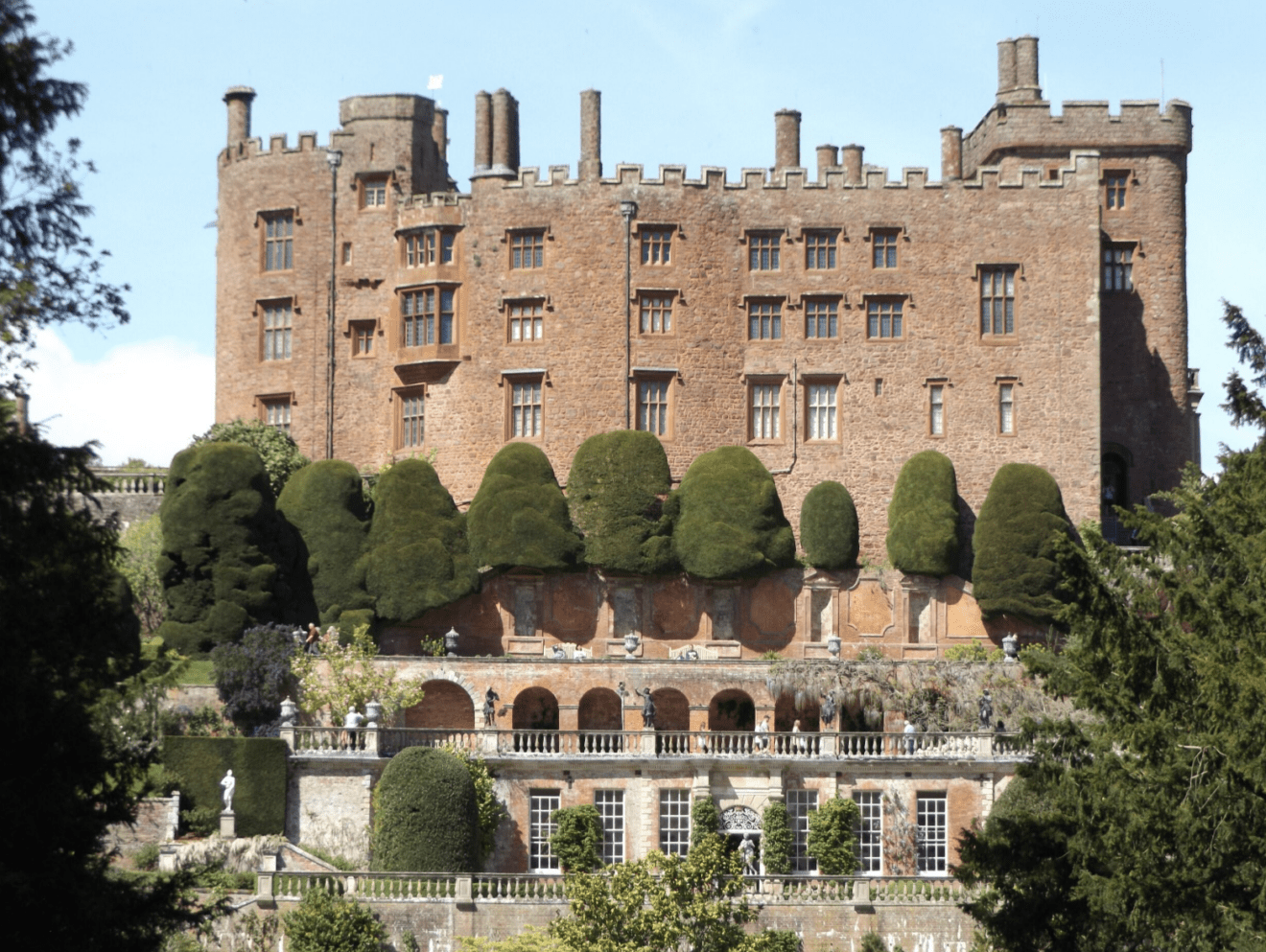
Powis Castle, one of the largest collections of Mughal artefacts outside of India. Credit Jalal Ahmed. 
Castell Powys, un o’r casgliadau mwyaf o arteffactau’r Mughal y tu allan i India. Llun gan Jalal Ahmed 

Today, Wales is home to around 67,000 Muslims, reflecting a community that is historic, diverse, and thriving. Dr Ahmed concludes:
“The overarching story is clear: there is a Muslim Wales — vibrant, historic, and with a future ahead of it.”

From pioneering converts like Khadija to landmark institutions and cultural contributions, the history of Islam in Wales is a testament to faith, resilience, and belonging — a story that continues to unfold across the nation.
Food & Drink

The Gastronomy Journal

Featured Fine Dining

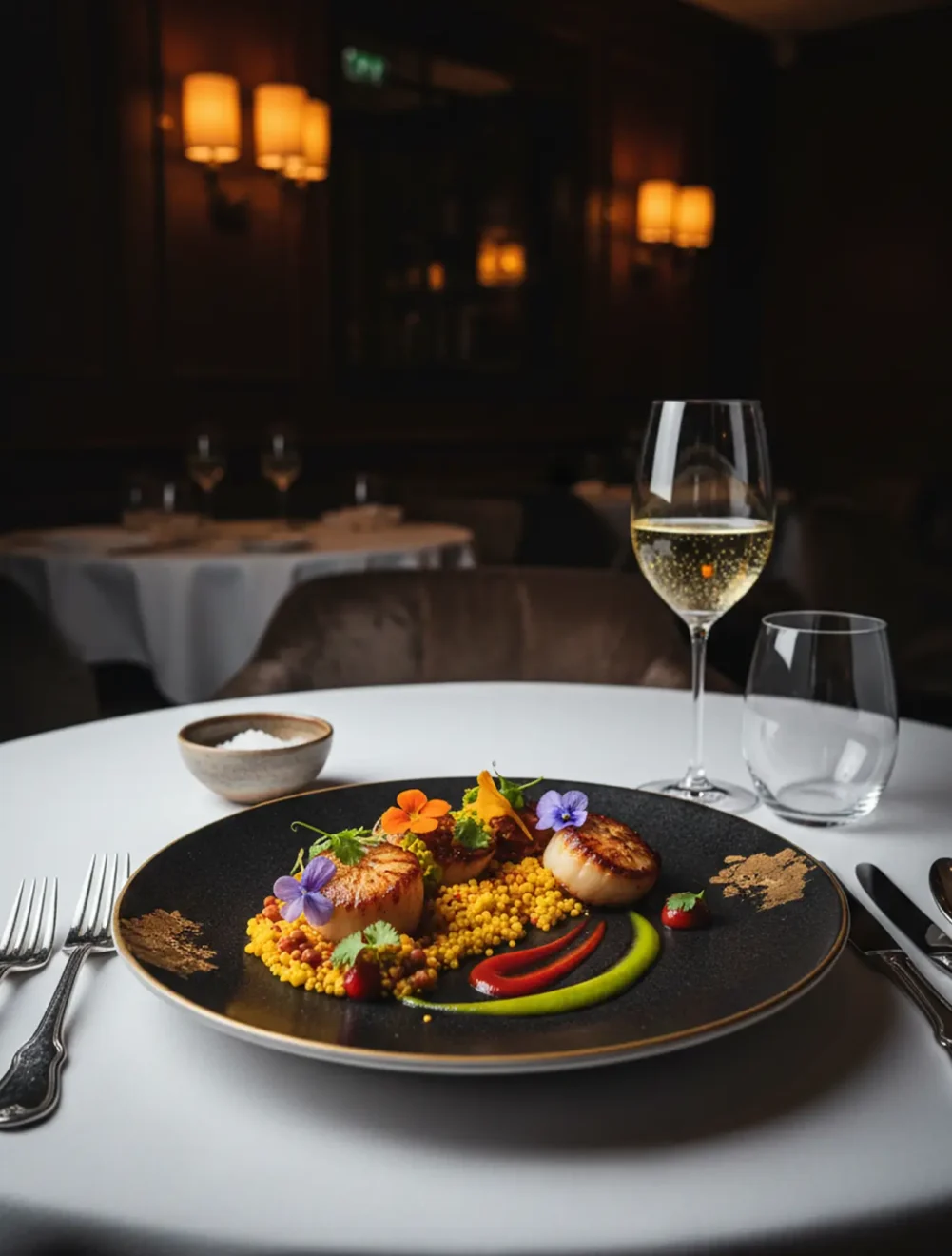
A Fine Halal Dining Experience at Colonel Saab

London’s luxury culinary landscape is evolving. At Colonel Saab, traditional Indian hospitality and complex spices are married with contemporary European presentation, presenting a strictly halal menu designed for the global epicure.

London Culinary Scene

The Rise of Halal Fine Dining in London's Mayfair

Atelier Recipes

Traditional Heritage Recipes Reimagined for Modern Tables

CULTURAL PIECE

The Living Legacy of Al-Andalus: How Islamic Spain Still Shapes Our World

Travel across the sun-drenched architectural echoes of Granada, Cordoba, and Seville to uncover how medieval craftsmanship, poetry, and philosophy continue to shape contemporary design and global thought.

Lifestyle

Exploring The Way We Live

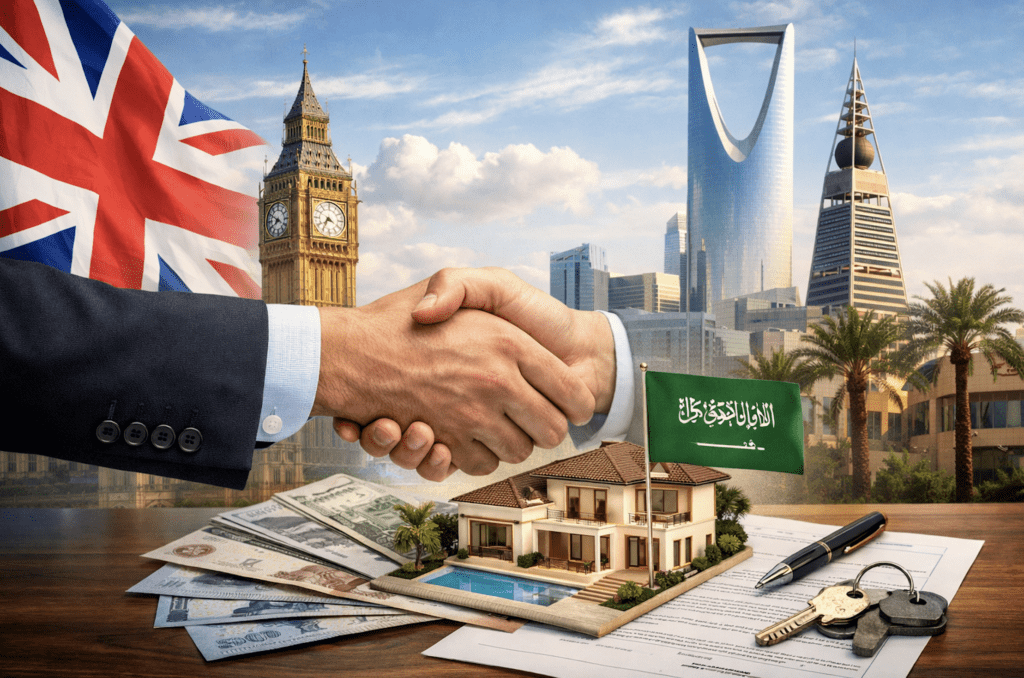
In a landmark move, Saudi Arabia has opened its real estate market to foreign buyers, including UK citizens, marking a significant shift in the Kingdom’s approach to international investment. This step is part of Vision 2030, the ambitious plan to diversify the economy and attract global capital.

UK nationals, along with other foreign investors, can now purchase property in designated areas, particularly in major cities such as Riyadh, Jeddah, and Dammam. While some strategic locations remain off-limits, the change offers unprecedented opportunities for international buyers.

Types of Properties Available

Foreign buyers have a variety of options:

  • Residential units: Apartments, villas, and townhouses in approved neighborhoods.
  • Commercial properties: Office spaces, retail outlets, and hotels.
  • Tourism-related developments: Resorts and serviced apartments in growing tourist zones.

Developers Opening Their Doors

UK investors looking to enter the Saudi market can consider several of the Kingdom’s most established and trusted developers:

  • Dar Al Arkan: Renowned for luxury residential and mixed-use projects in Riyadh and Jeddah, including landmark developments like Trump Plaza through its international arm, Dar Global.
  • Roshn: Backed by the Public Investment Fund, Roshn focuses on large-scale urban communities with modern townhouses and villas, ideal for international buyers seeking integrated neighborhoods.
  • Emaar The Economic City: Developer of King Abdullah Economic City (KAEC), offering a mix of residential, commercial, and leisure properties within a planned economic hub.
  • Al Akaria and SEDCO Development: Long-standing firms providing a variety of residential, commercial, and hospitality properties in prime locations.
  • Sumou Real Estate: Emerging developer with urban residential projects accessible to different budgets while maintaining high standards.

Saudi Arabia’s mega-projects offer unique opportunities for foreign buyers:

  • NEOM: The Kingdom’s flagship futuristic city includes zones like Trojena and Sindalah, where foreigners can purchase residences with full ownership rights. These developments emphasize luxury, sustainability, and tourism-oriented living.
  • Mada Properties: A local agency assisting international buyers with legal compliance and navigating bureaucratic requirements, making foreign investment smoother.

How UK Citizens Can Invest

Investing in Saudi property requires careful planning:

  1. Choose a project from an approved developer or special zone.
  2. Obtain approval from the Saudi Ministry of Investment.
  3. Register with the Saudi Land Registry and complete all legal documentation.
  4. Consider financing or cash payment, as mortgages for foreigners are limited.

Opportunities and Challenges

Saudi Arabia presents several advantages:

  • Strong growth potential: Mega-projects like NEOM and the Red Sea Project drive demand and property value.
  • Stable returns: Rental yields in major cities are competitive, with opportunities in both luxury and commercial sectors.
  • Residency pathways: Property ownership can facilitate long-term residency, though it does not confer citizenship.

However, foreign investors must navigate legal, cultural, and market differences. Using licensed agents, understanding local regulations, and conducting due diligence are essential to avoid pitfalls.

Expert Insight

“UK investors now have the opportunity to access a market that has traditionally been closed off,” says Sarah Collins, a London-based property consultant. “But careful planning, legal guidance, and market research are crucial for success.”

For UK citizens, Saudi Arabia is no longer a closed market. With leading developers like Dar Al Arkan, Roshn, and Emaar, alongside emerging opportunities in NEOM and other futuristic zones, the Kingdom offers a wealth of investment possibilities. With proper research and guidance, British buyers can confidently participate in Saudi Arabia’s rapidly growing and dynamic real estate landscape.

Want to find out more about investments in Saudi, sign up to our FREE newsletter today!

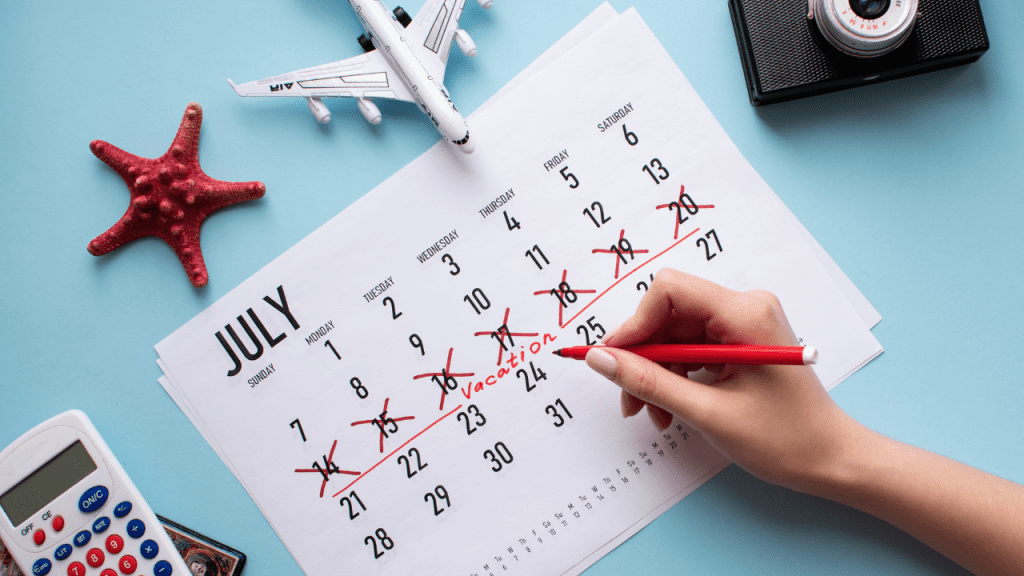
Sunshine, sea breezes, and mocktails – what’s not to love about summer travel? Well… maybe just one thing… big, frizzy hair that seems to double in volume the moment you step off the plane. Humidity can wreak havoc on even the most well-behaved locks, leaving you battling a cloud of puffiness instead of enjoying your holiday glow. But fear not – with the right products, techniques, and prep, you can outsmart humidity and travel with hair that behaves.

The fight against frizz begins before you’ve even left the house. Make sure your hair is well-hydrated before travel – dry hair is like a sponge for humidity.

Try:

  • Deep conditioning masks a day or two before your flight. Look for ingredients like shea butter, argan oil, or keratin.
  • Avoid harsh shampoos that strip natural oils. Instead, opt for sulfate-free formulas.

If your hair is naturally prone to puffing, your usual blow-dry-and-go routine might not cut it in tropical climates. Instead, go for humidity-friendly styles:

  • Braids, buns, or sleek ponytails keep your strands compact and under control.
  • If you want to wear your hair down, opt for a loose wave – it blends better with natural movement than trying to keep it poker-straight.

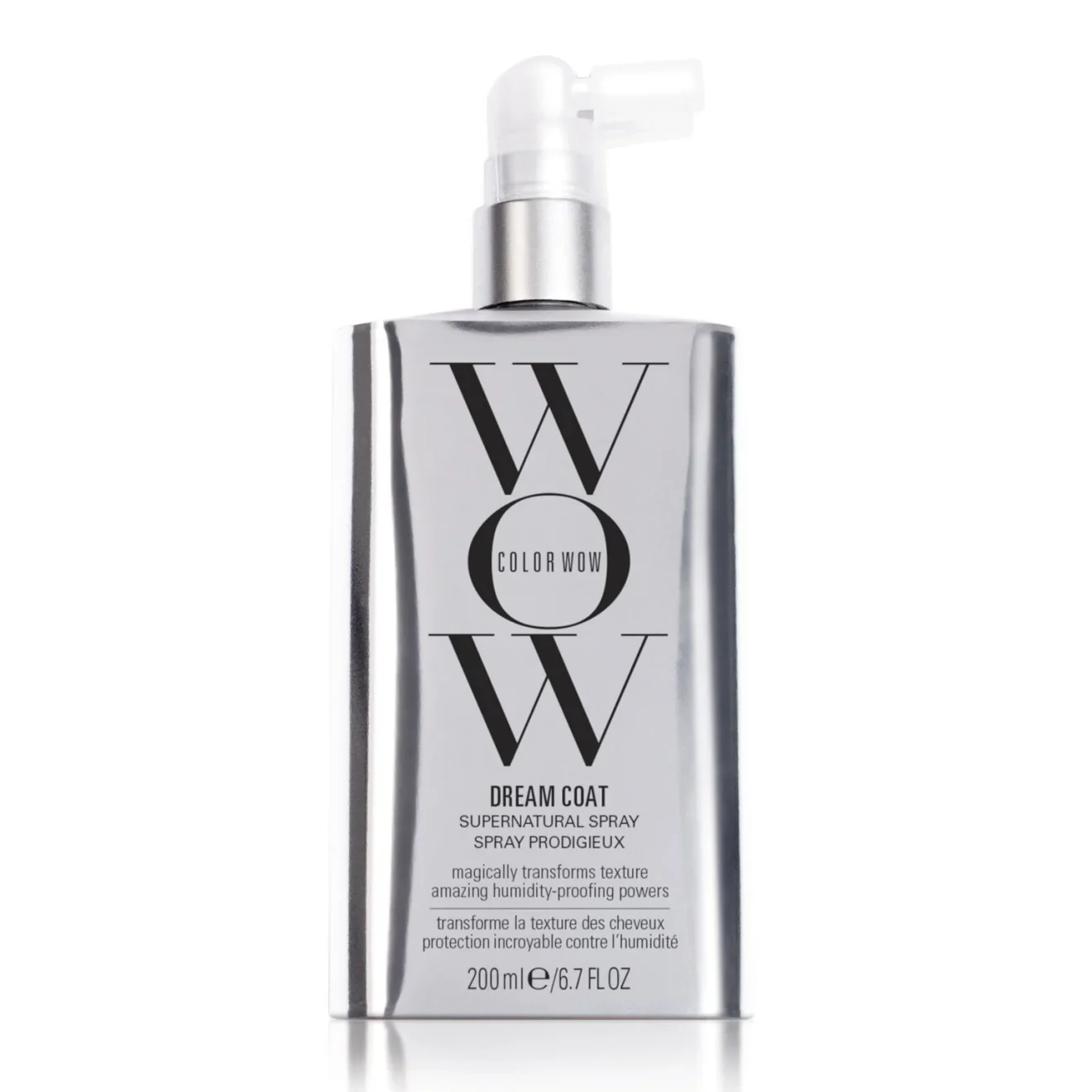
Humidity causes frizz because moisture in the air penetrates the hair shaft and disrupts its natural shape. A good leave-in conditioner or anti-humidity spray creates a barrier against this.
Hero Products:

  • Anti-humidity sprays like Color Wow Dream Coat or Living Proof Humidity Shield
  • Lightweight oils such as argan or marula oil (use sparingly to avoid greasiness)

Straighteners and curling wands might seem like a good idea, but in humid climates, your styling won’t last — and can actually make frizz worse by drying out your hair. Instead, air dry with the help of a curl-defining cream or smoothing serum.

A chic scarf, wide-brim hat or silk headband isn’t just stylish — it also protects your hair from the sun, wind, and excess moisture.

Pro tip: Sleep on a silk pillowcase or wrap your hair in a silk scarf at night to reduce friction and wake up with smoother strands.

Caught out in a rainstorm or sweating through a sightseeing tour?

  • Rub a tiny bit of hand cream between your palms and smooth over flyaways.
  • A travel-sized dry oil mist can refresh and tame puffiness without needing a mirror.

Humidity doesn’t have to hijack your holiday hair. With smart prep, the right products, and a little styling creativity, you can stay sleek, smooth, and selfie-ready – no matter how tropical your destination.

Now, go enjoy your trip — and let your hair be the least of your travel worries.

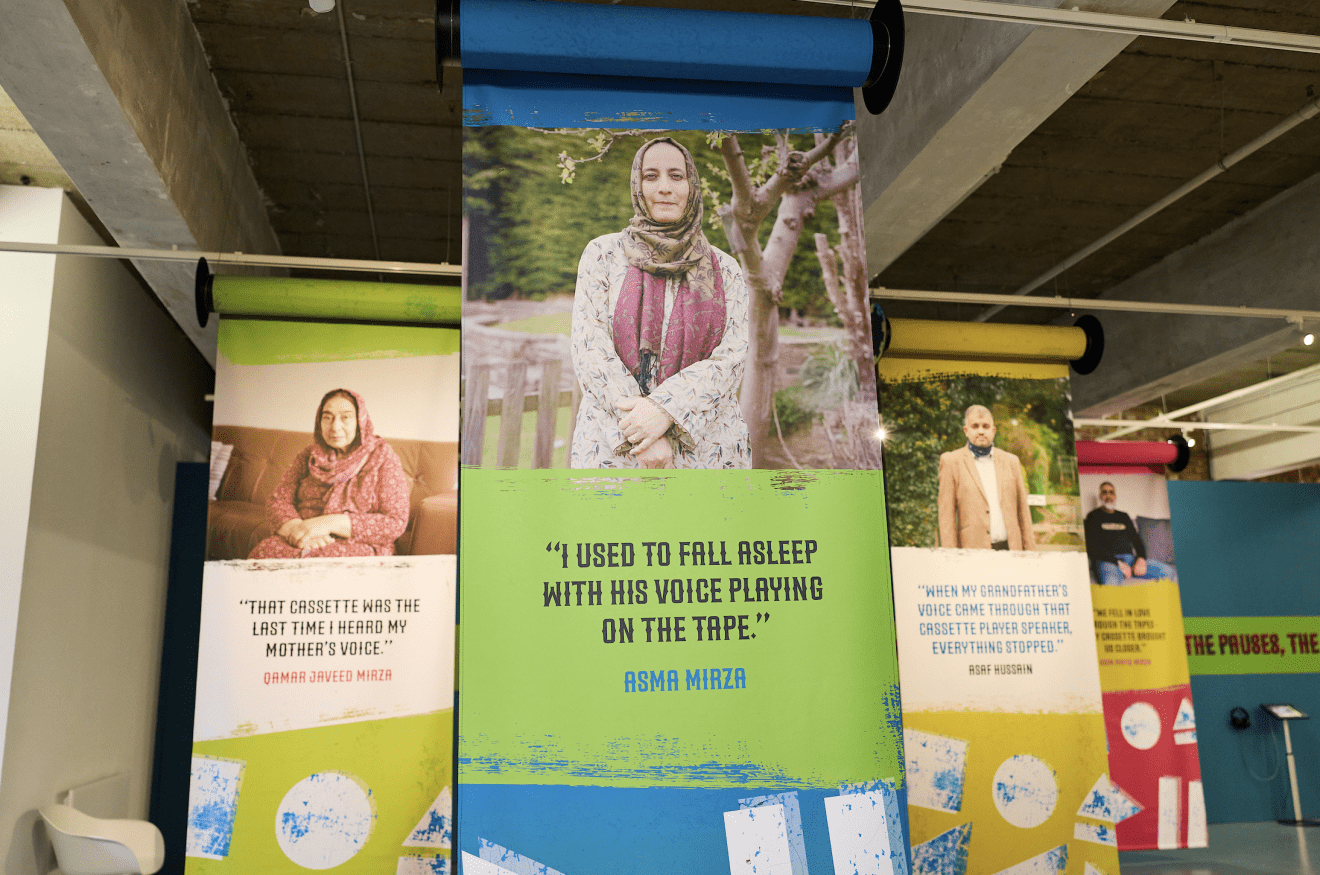
Bradford – At the heart of the UK’s City of Culture 2025, an extraordinary exhibition is tuning into voices from the past that still resonate with love, longing and cultural resilience. Tape Letters, a powerful audio-visual experience running from 22 May to 15 June at Loading Bay’s Gallery, sheds light on a long-overlooked form of connection that held British-Pakistani families together during times of distance and migration.
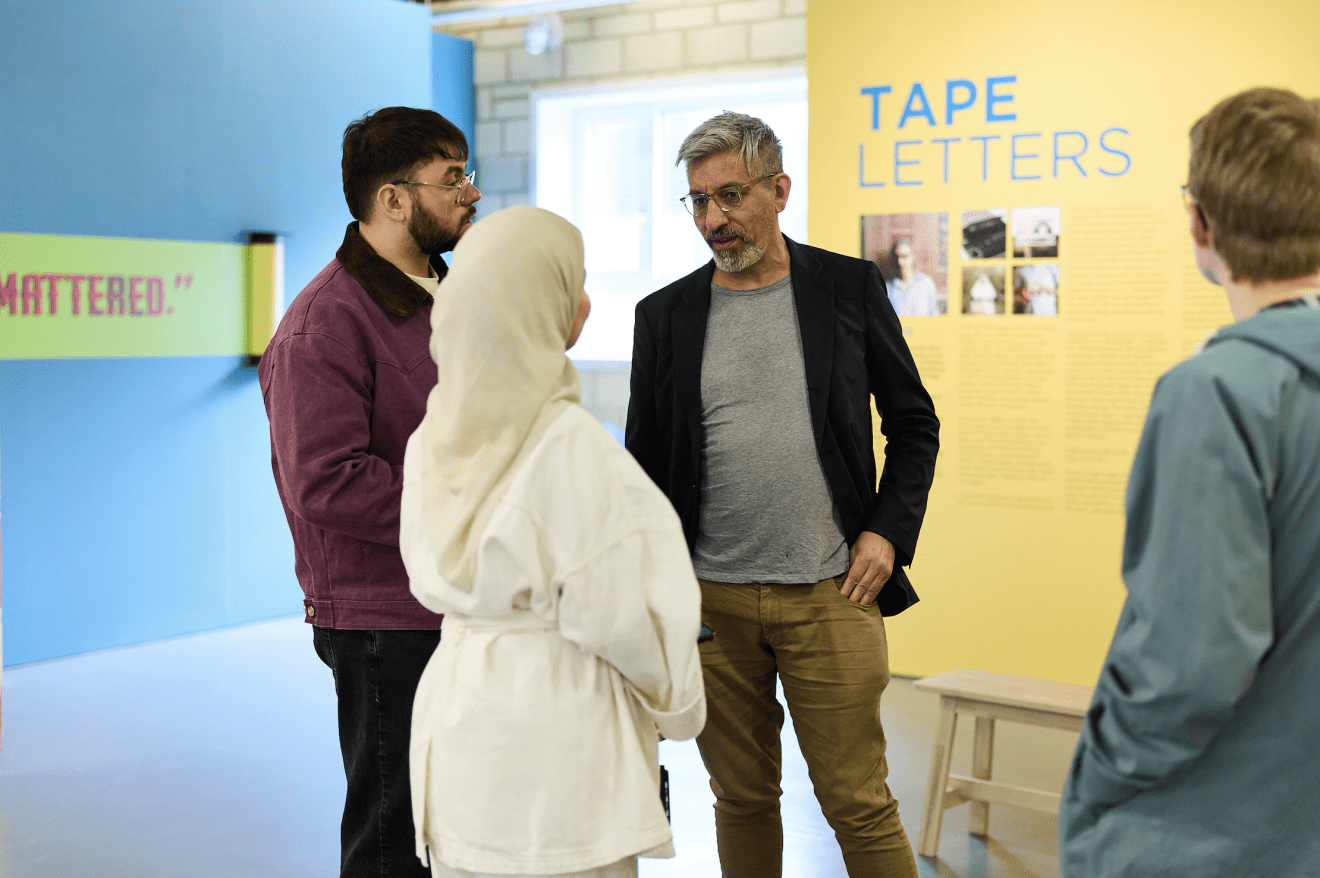
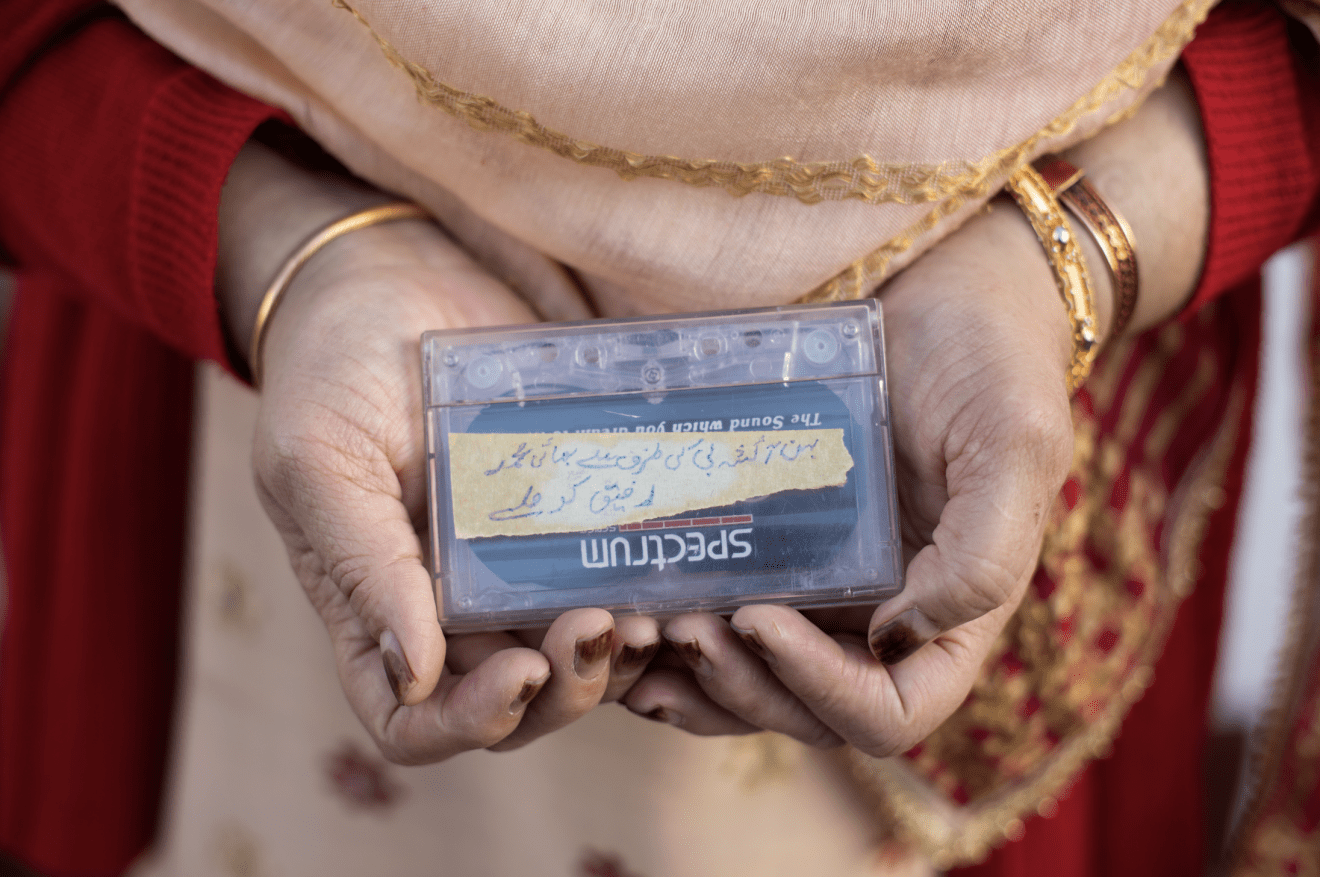
Curated specifically for Bradford 2025, the exhibition explores a deeply personal chapter of community history — when cassette tapes became lifelines between those who had settled in the UK and loved ones back home in Pakistan. Between the 1960s and 1980s, when international calls were costly and not every elder could read or write letters, recording and posting cassette tapes became the bridge across continents.

Featuring 12 intimate stories from Bradford families, the exhibition blends portrait photography, handwritten quotes, and rare audio recordings drawn from a remarkable archive — one that captures over 200 British-Pakistani voices. These tapes, now housed at London’s Bishopsgate Institute and the National Library of Scotland, are more than just sonic relics — they’re emotional artefacts, steeped in migration, memory, and love.
A Personal Tradition, A Shared Legacy

For many British Muslims, particularly those of Pakistani heritage, the Tape Letters project strikes a chord. Families like that of Asaf Hussain recall sitting around the tape recorder like it was the 9 o’clock news. “For us kids, it was just hearing his voice that mattered,” he says. “Sometimes he’d reply to what we’d said on our last tape, like he was right there with us.”

Asma Mirza, another Bradford contributor, shared a more private side of the story — the emotional intimacy tapes could offer. “There was no cordless phone, and I couldn’t speak to Asim in front of my family,” she remembers. “So he sent me a cassette and said, ‘Tell me what’s in your heart.’ I kept those tapes locked in my suitcase.”

These stories, and many like them, form a mosaic of shared experience — of parents separated from their children, of young love whispered into plastic reels, of joy, grief, and the subtle complexities of identity.

An Act of “Sonic Archaeology”

The exhibition is the brainchild of Wajid Yaseen, founder of Modus Arts, who first discovered the phenomenon through his own family’s history. Since launching the project in 2018, he has described the archive as a kind of “sonic archaeology,” unearthing forgotten communication methods and examining them through the lens of migration, linguistics, class, and belonging.

Yaseen said: “The project demonstrates the deep and inherent need for people to communicate — wherever they’re from or wherever they find themselves in the world.”

His words echo the broader goals of Bradford 2025 UK City of Culture, which seeks to centre authentic local stories in national conversations around art, history, and identity.

A Culture Carried on Tapes

Shanaz Gulzar, Creative Director of Bradford 2025, shares her own childhood memories of sending tape recordings to family abroad. “Culture Club songs would be interspersed with distant family voices,” she laughs. “Cultural fusion before we knew it.”

Tape Letters is more than just a nostalgic glance at the past. It is a celebration of innovation — of how a community crafted its own way of staying connected long before WhatsApp or FaceTime. It is also a subtle reminder of the emotional intelligence embedded in analogue communication — the tone of voice, the pauses, the laughter, the poetry.
A Visit Worth Making

Tape Letters Bradford is not just for historians or artists — it is for anyone who has ever longed to hear a loved one’s voice again. It’s for children of immigrants, for families divided by geography, and for those curious about the beautiful resilience of communities that found ways to stay human in an era of distance.
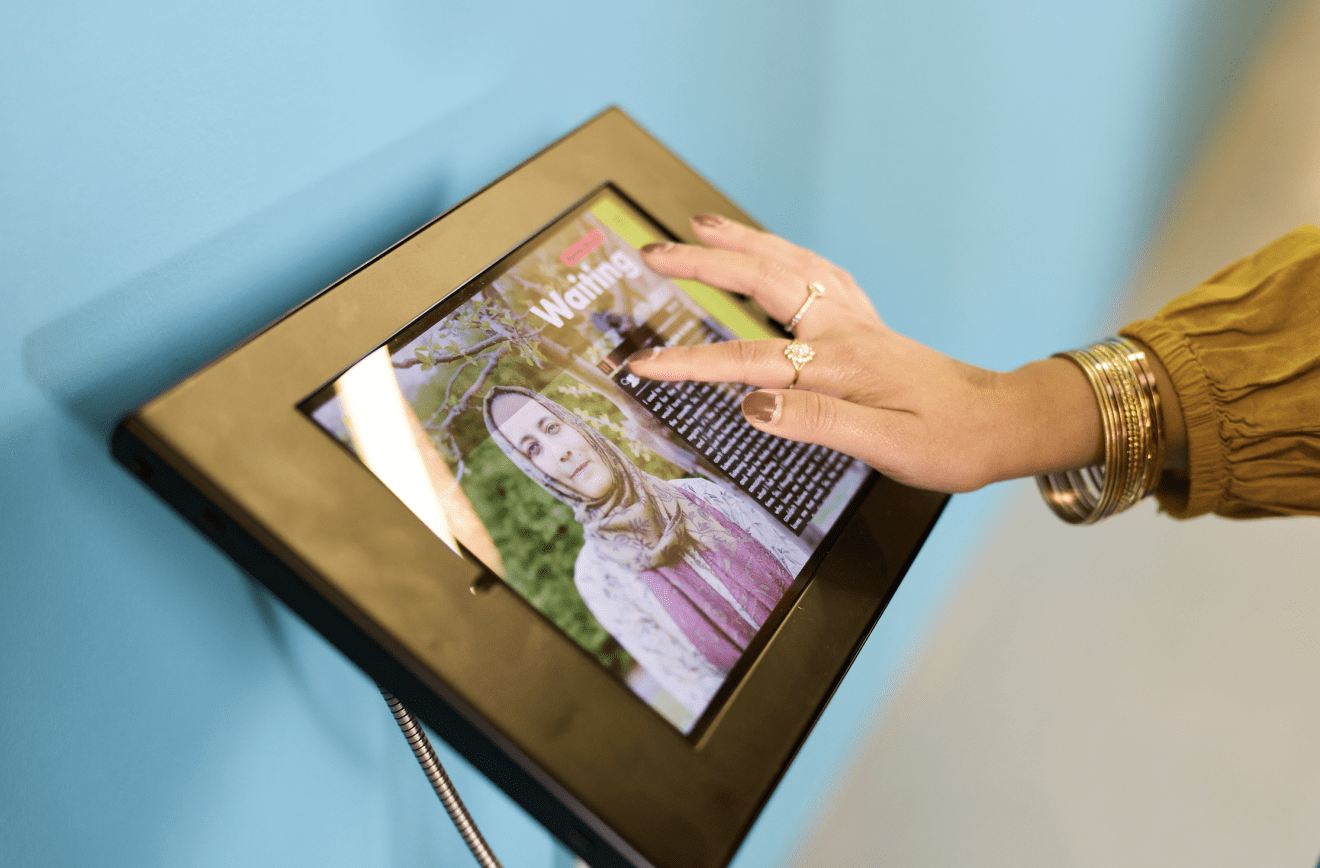
Running until 15 June, the exhibition is free to enter and promises an experience that is both moving and uplifting.

Produced by Modus Arts and commissioned by Bradford 2025 UK City of Culture, Tape Letters is supported by The National Lottery Heritage Fund and Arts Council England.

Image: David Lindsay
Fashion & Beauty

Sartorial Identity & Modest Couture

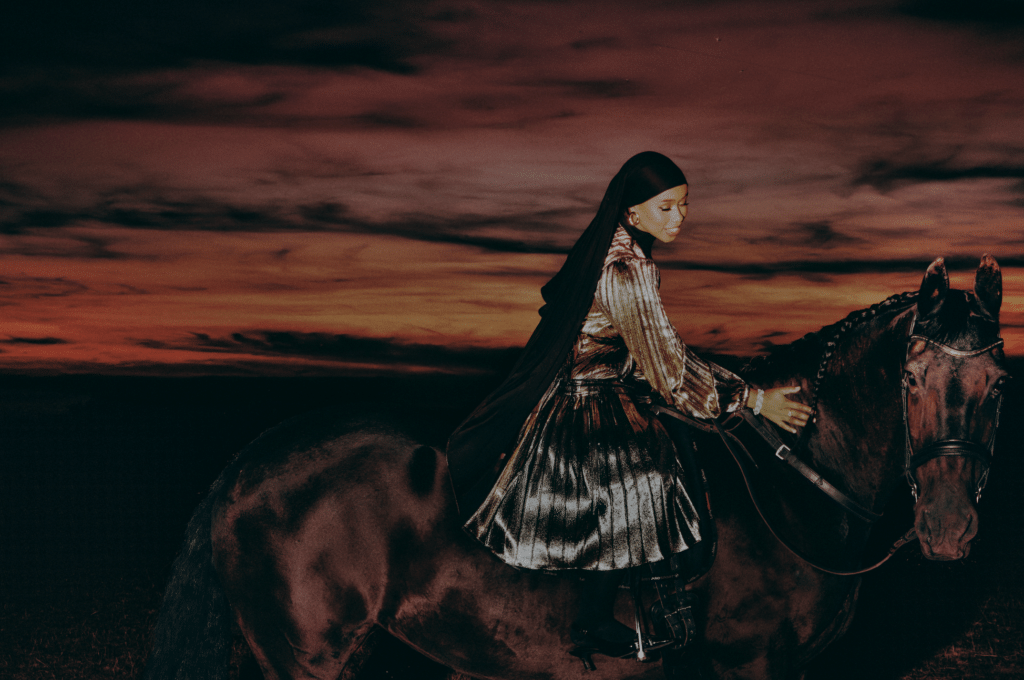
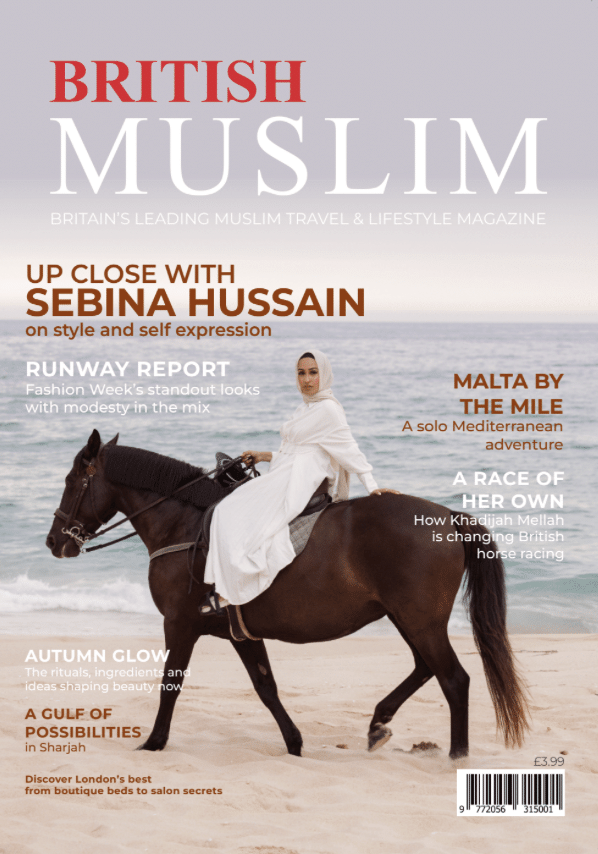
Six years after making history at Goodwood, khadijah, Britain’s first hijab-wearing jockey, is working to build a lasting career.

The sport still has some catching up to do.

There’s a version of Khadijah Mellah’s story that’s been told a hundred times: Peckham girl, mosque leaflet, Magnolia Cup, history made. It’s all true. But sit with her for just 20 minutes – mid–commute, phone cutting in and out, training schedule pulling her in three directions at once – and a different story starts to surface underneath.

Khadijah grew up in Peckham with a ‘weird divine obsession’ about animals and horses.

Riding lessons cost £30 to £40 per session, which her parents could not afford. So she accepted that it wasn’t going to happen.

Then her mum found a leaflet at a mosque in Brixton for the Ebony Horse Club.

I thought it was just a theatre-inspired group or something, she says.

I was in disbelief when we visited; I thought, ‘Oh my God, this is real’. She was hooked and asked to join, though she was too young. The founder made an exception for her and her siblings. After two years on the waiting list, she finally got in. She stayed for almost a decade.

“I was part of the Ebony Horse Club tapestry for about eight, maybe nine years, khadijah, she says.”

She volunteered on extra days, took part in every activity she could.

Later, she worked her way up quickly.

She had never ridden a racehorse until a few months before the Magnolia Cup.

The Magnolia Cup is an annual charity race for amateur female riders at Goodwood. At the same time, she was studying for her A-Levels. Ramadan fell in the middle of it all.

“It was extremely intense,” she says.

She would study until 11 pm. Early, she would get up early for circuit training. She went to school and trained in the gym during lunch breaks. Her school made an exception so she could use the gym without supervision. She was fasting too.

“I replaced food with a heavy gym session,” she says.

In 2019, she crossed the finish line first at Glorious Goodwood. She became the first person in Britain to win a race wearing a hijab. What she remembers most is not the triumph, but the relief.

“I was 18,” she says.

I think I was just a bit unaware of the gravity of what I was getting myself into. Khadijah remembers the moment with mixed feelings.

“To me it was just another goal I wanted to achieve. I didn’t realise people would care about my journey.” 

What stayed with her was the parade ring and the feeling that she hadn’t let anyone down.

For months she’d been falling off, getting injured and hearing that she wouldn’t be any good.

She’d had just three and a half, maybe four months, to learn what she calls an extremely skilled sport.

Winning was less important than the relief.

Moreover, it changed my life massively, forever.

Khadijah has said she does not want to be treated as a token, valued for being first.

Six years on, racing still hasn’t changed.

For three years she has worked toward a senior Category A jockey licence.

But bookings as an amateur remain rare.

I thought I’d be better received, she says.

I think racing is happy to have a one-off story of diversity to show progress.

Nevertheless, carrying that diversity through the ranks is slower.

She’s not bitter, she says, just realistic. She points to young jockeys she’s mentored who are now winning races. “I may have to come to terms with accepting that I had to walk for others to run. It is a reality I must face.” Most of her support comes from outside racing. “There are select individuals that have independently carried me, and I can name them on three fingers.”

She says the industry is unstable and pulled in different directions, and her own career isn’t a priority. “I’m not bringing in ownership or funding, so to them, right now, I’m not a massive priority.”

Brands are finally showing interest in Khadijah’s journey.

To read the full interview, subscribe to our next issue HERE

Stay In The Know

The British Muslim Newsletter

Get the latest stories from British Muslim Magazine, from travel and culture to faith, food, fashion and wellbeing, delivered directly to your inbox.

ABOUT BRITISH MUSLIM MAGAZINE

"British Muslim Magazine is the UK's leading platform covering Muslim lifestyle, culture, travel, food, fashion, faith and contemporary stories for a global audience."

Search the Magazine

What are you looking for?

Popular topics

Subscribe to our Newsletter

Stay updated with the latest articles from British Muslim Magazine by subscribing to our newsletter! Get full access to all our content, not just previews, and never miss an update!